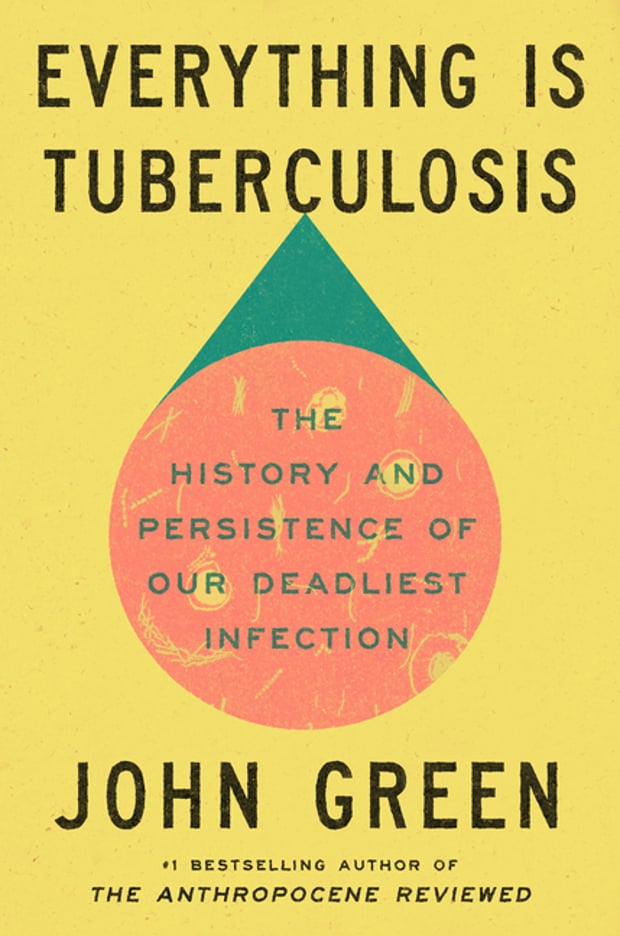
Everything Is Tuberculosis
The History and Persistence of Our Deadliest Infection
By John Green
Right out of the gate, it's a very compelling thesis about how the persistence of TB is not about techology or medicine but about injustice. Green quotes his friend:
Nothing is as priveleged as thinking that history is in the past.
This is true on so many levels. History repeats and it rhymes and for some, progress only comes at a glacial pace.
TB has killed far more people than the World Wars combined, and even the Black Plague. But it's profound impact on the globe is usually not even a footnote in most history classes. Nevermind that it's still very much a big problem even today, yet is seldom mentioned in the American news. (We have a 24-hour news cycle but somehow can't manage to find the time to mention the deadliest infectious disease in the world?)
Why is it ignored? It relates to who these days is most impacted. Colonisation/slavery and the persistent consequences -including those not immediately apparent (like train routes in Sierra Leone build for resource extraction, not for its communities)- mean less access and poor quality healthcare, so TB has a chance to flourish. Not to mention lack of food and how hunger makes TB treatment that much more difficult.
Historically -- though I'd argue it persists in some forms today -- the illness was praised for how it made its victims "more beautiful. " People actually desired to contract TB to achieve the standard of "Consumption chic". Romanticising the disease by praising how good it makes women look - thin and rosy cheeked. (There are parallels even today with receiving weight loss compliments in the wake of an illness...)
There was also romanticizing the illness when it's contracted by artists or writers as if their artistic tendencies made them more susceptible to the disease and made their work more beautiful because of it (and equating their shortened lives with their genius).
Of course, this only happens when the illness befalls white people. Other populations are ostracized when they contract TB as if it's their shortcomings that caused it to happen to them. Racializing the disease or dismissing it as only happening to the wicked happened when TB moved into newly urban industrialized zones and began impacting poor people due to dense housing.
After Henry's story started to circulate, there was an outpouring of support allowing his family to get back on their feet. Green reflects:
When we know about suffering, when we are proximal to it, we are capable of extraordinary generosity. We can do and be so much for each other. But only when we see one another in our full humanity - not as statistics or problems - but as people who deserve to be alive in the world.
The conclusion? That TB and other diseases and hardships do not fall on poor countries because they have some deficiency, or have corruption, or have geographic disadvantages, etc. Or that science or medicine simply haven't advanced enough. It's because deficiencies are caused by racism and colonialization and a capitalist system that doesn't value human life over dollars and cents. When we have the vaccines and the treatments and screening capabilities, they don't make it to the hands of those who need it most -- whether that's Freetown, Sierra Leone or rural Alaska -- because it's simply not profitable to do so. TB can be a thing of the past for the rich, the white, and the well-connected, but continues to plague those who have darker skin and emptier pockets.
Tags:
colonization slavery disease health social inequities medical care Beauty standards Racism author narrated208 pages
Published Mar 17, 2025 by Crash Course Books
History - World - General
History - Europe - General
Science - Chemistry - General
Medical - Infectious Diseases
Social Science - Disease & Health Issues
Science - History