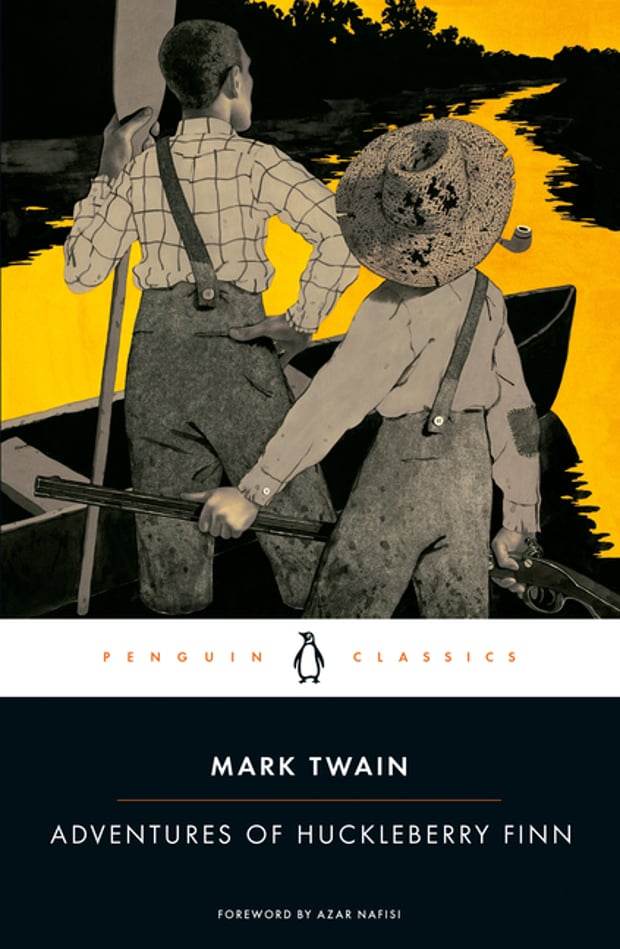
Adventures of Huckleberry Finn
Notes
Another one I somehow missed in my decades of reading. I can understand why it's sometimes considered controversial: Now, in the 2000s, the language can be jarring. Even the story can be jarring at times because many of us are not accustomed to the kind of raw, poverty-ridden, rough lives portrayed in this adventure. Then again, is it really so different from now?
You'd have to ask people who are still living, now, on the knife-edge of poverty and fear, where the only reliable rules are the ones you make for yourself and even those have to be malleable.
Yes, the way Huck treats Jim, at times, can be unsettling, but I can't doubt the reality of it in the times for which it was written. And yes, Twain can be sharp but he's also knowing. The people he satirizes are people he knows about, and he portrays their ignorance or conceit or coldness or plain foolishness to draw attention to the ways "civilization" doesn't reach as far as we'd like to think.
And it's funny, in places. Sad in places. Scary in places. But I'm not sure I've ever read a lovelier passage than the opening of Chapter 19, with sunrise and night and easy companionship on the massive Mississippi.
I'm glad I finally read Huck Finn.
(I do tend to agree with Hemingway's assessment that the final section, from chapter 32 onward, is "cheating." It feels like part of a different book, and is just silly. Funny, but silly compared to the rough reality of the rest of the book.)
You'd have to ask people who are still living, now, on the knife-edge of poverty and fear, where the only reliable rules are the ones you make for yourself and even those have to be malleable.
Yes, the way Huck treats Jim, at times, can be unsettling, but I can't doubt the reality of it in the times for which it was written. And yes, Twain can be sharp but he's also knowing. The people he satirizes are people he knows about, and he portrays their ignorance or conceit or coldness or plain foolishness to draw attention to the ways "civilization" doesn't reach as far as we'd like to think.
And it's funny, in places. Sad in places. Scary in places. But I'm not sure I've ever read a lovelier passage than the opening of Chapter 19, with sunrise and night and easy companionship on the massive Mississippi.
I'm glad I finally read Huck Finn.
(I do tend to agree with Hemingway's assessment that the final section, from chapter 32 onward, is "cheating." It feels like part of a different book, and is just silly. Funny, but silly compared to the rough reality of the rest of the book.)